


Newsletter Subscribe
Enter your email address below and subscribe to our newsletter

Enter your email address below and subscribe to our newsletter
Live with Intention
Many people struggle with healthy eating not because they lack discipline, but because they run out of ideas. When meals start to feel repetitive or planning becomes mentally exhausting, motivation fades. Decision fatigue pushes people toward fast, convenient options that require little effort but rarely support long-term health.
When food decisions feel overwhelming, even strong intentions weaken. A small collection of simple, reliable meal ideas removes this friction. Instead of constantly searching for inspiration, you operate from a familiar system that simplifies shopping, preparation, and daily choices.
Healthy eating becomes easier when decisions are automated.
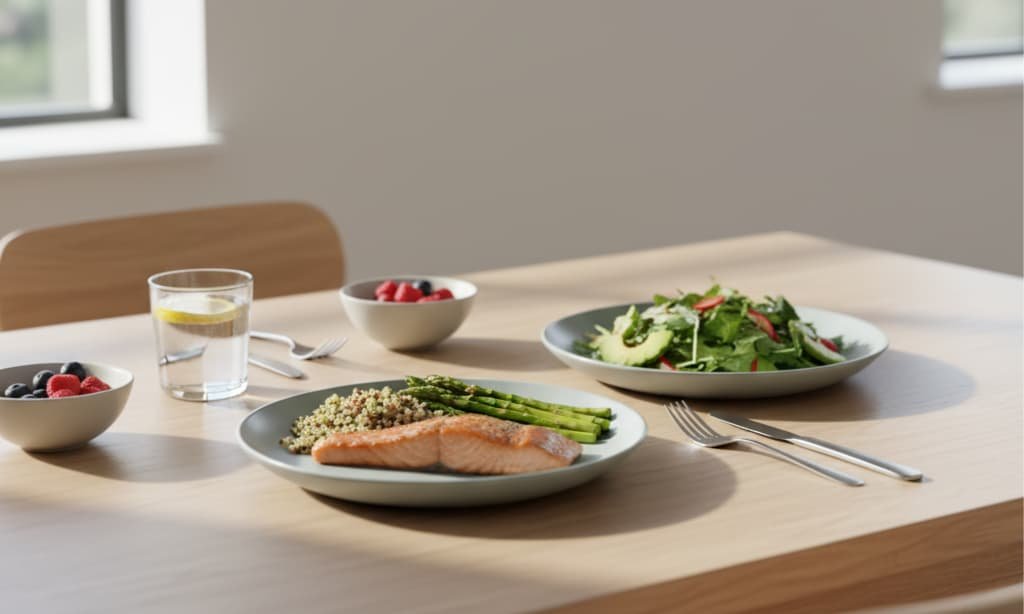
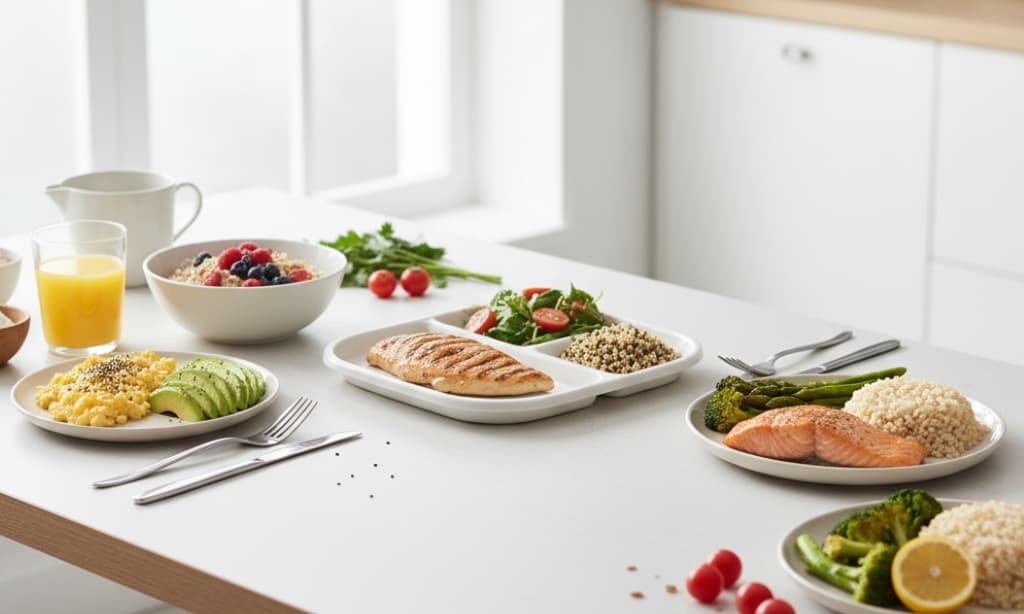
Healthy meal ideas do not need to be complex. In fact, the most sustainable meals are often the simplest. A solid meal idea includes three basic components: a source of protein, fiber-rich vegetables, and a moderate amount of carbohydrates or healthy fats.
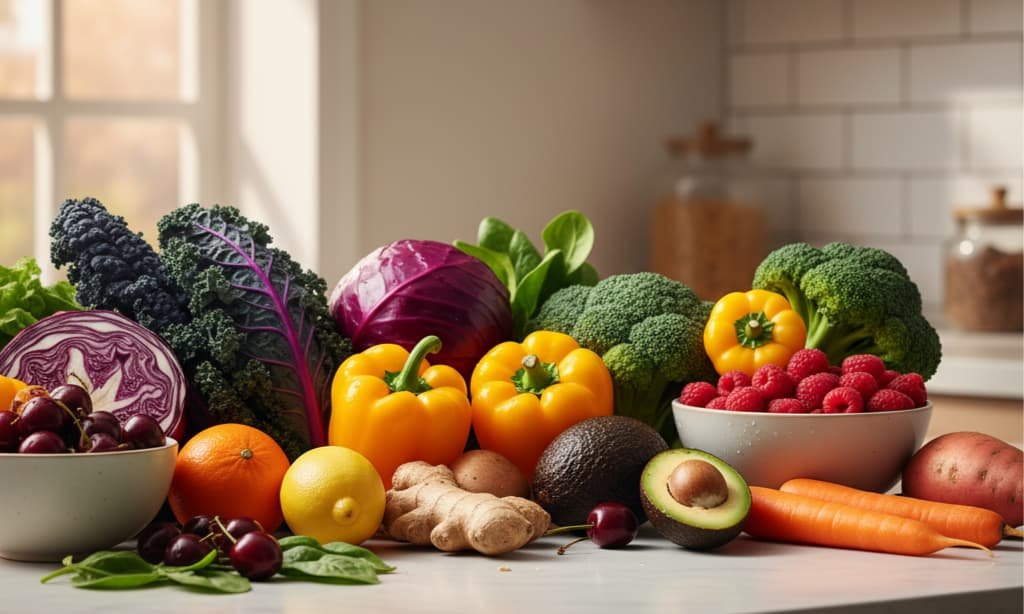
Protein supports fullness, muscle maintenance, and stable appetite. Vegetables provide volume, fiber, hydration, and micronutrients. Carbohydrates and healthy fats provide energy, satisfaction, and hormonal support. When these elements are balanced, meals naturally support consistency without excessive restriction.
Simple structure removes guesswork. Instead of focusing on recipes, you focus on building blocks.
Breakfast works best when it is both simple and satisfying. Meals that provide protein and fiber prevent energy crashes and reduce cravings later in the day. Reliable breakfast ideas eliminate rushed decisions and skipped meals.
Options such as eggs with vegetables, yogurt with fruit and seeds, oatmeal with added protein, cottage cheese with berries, or smoothies made with whole ingredients provide balanced nutrition. These meals are quick to prepare and easy to repeat.
Preparing breakfast ingredients in advance further reduces friction. Washed fruit, pre-chopped vegetables, overnight oats, or pre-cooked eggs streamline busy mornings.
Consistency at breakfast stabilizes appetite and supports energy throughout the day.
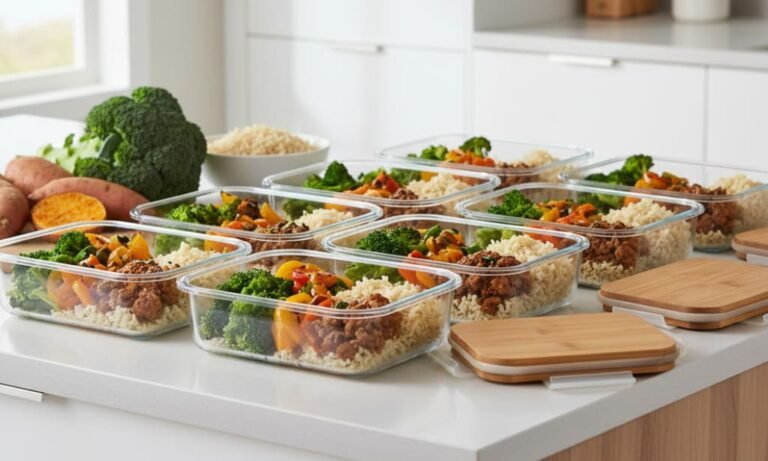
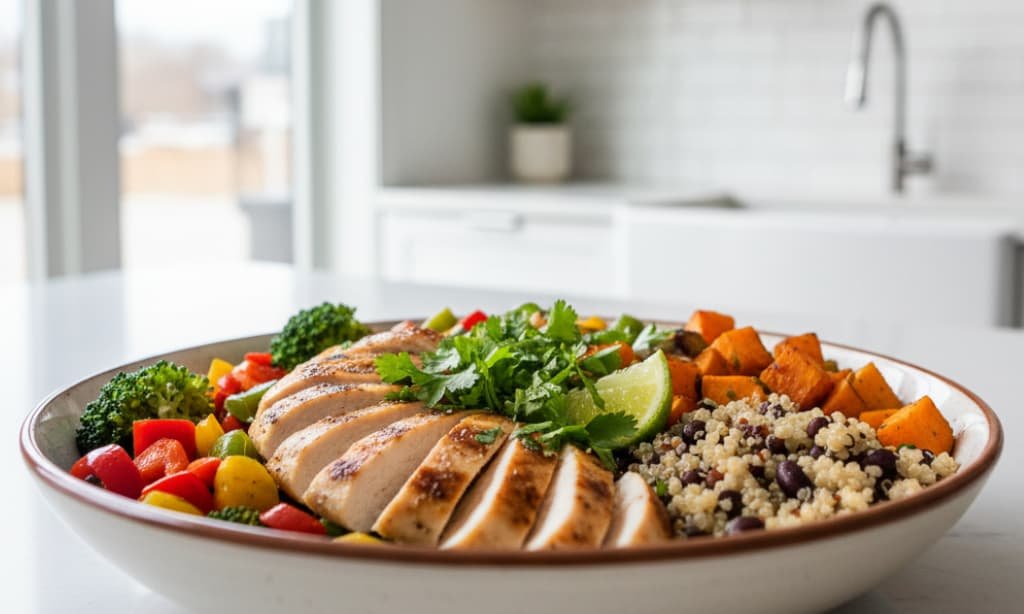
Lunch meals should be easy to prepare, pack, or assemble quickly. Grain bowls with protein and vegetables provide flexibility and balance. Large salads with added protein and healthy fats keep hunger under control. Whole-grain wraps filled with lean protein and vegetables offer convenience and portability.
Leftovers from dinner often make the simplest lunches. Reusing cooked ingredients reduces waste and saves time.
A filling lunch prevents afternoon fatigue and impulsive snacking. Balanced lunches support productivity and mood while maintaining dietary consistency.
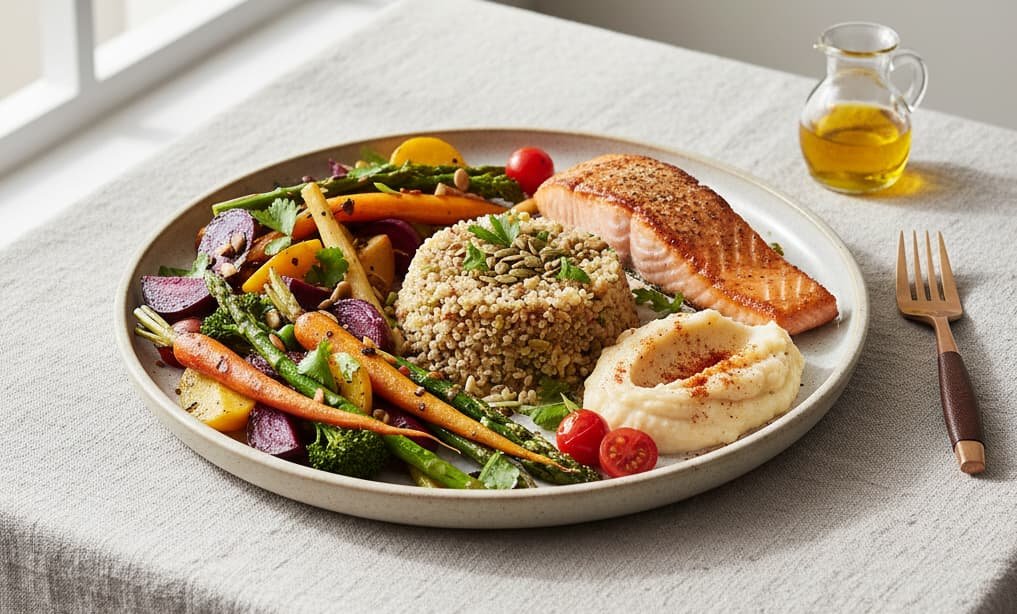
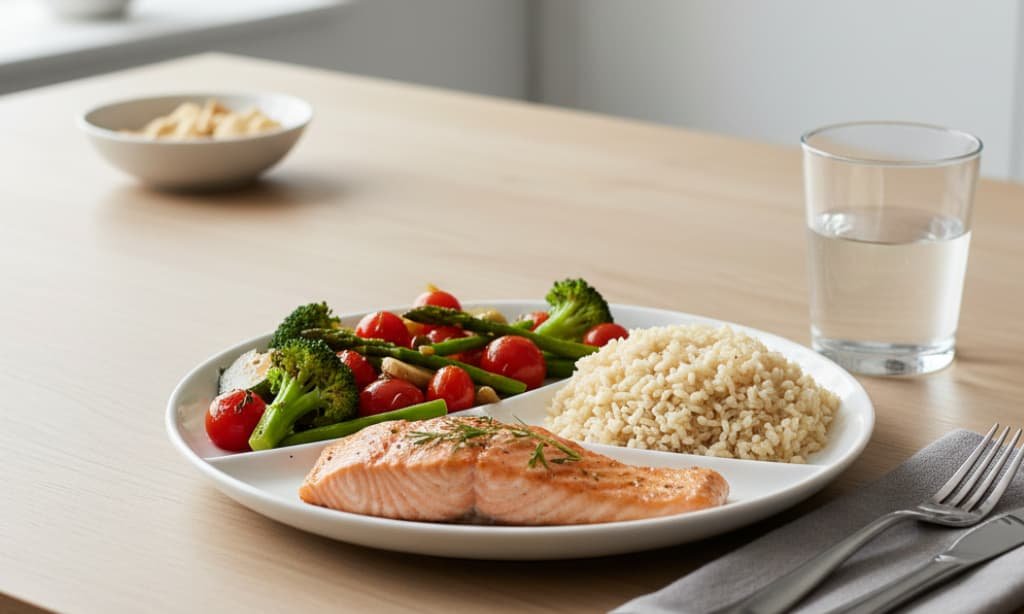
Dinner should support recovery and relaxation rather than create additional stress. Simple cooking methods such as grilling, roasting, stir-frying, or one-pan meals reduce cleanup and time in the kitchen.
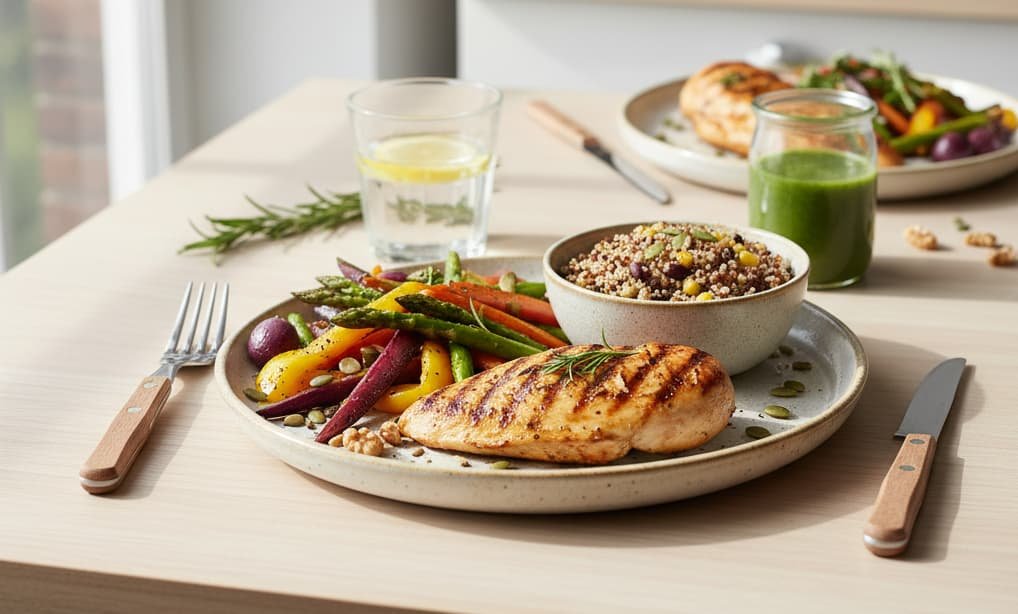
Meals such as grilled protein with roasted vegetables, vegetable-heavy stir-fries with lean protein, sheet-pan meals, soups, or slow-cooker recipes provide nourishment without complexity.
Keeping dinners predictable allows mental recovery after busy days and improves adherence.
Snacks can support energy balance when used intentionally. Simple snack ideas such as fruit with nuts, yogurt, boiled eggs, cottage cheese, hummus with vegetables, or whole-grain crackers provide steady fuel between meals.
Planned snacks prevent extreme hunger and reduce impulsive food choices. Having snacks readily available supports consistency during busy schedules.
Snacks should support nourishment rather than replace meals.
Rotation keeps meals interesting without increasing planning effort. Maintaining a short list of go-to meal ideas allows variety while preserving simplicity.
Changing seasonings, vegetables, protein sources, or cooking methods refreshes familiar meals without requiring new recipes. Seasonal produce naturally introduces variation and improves nutrient diversity.
Rotation prevents burnout and supports long-term adherence.
Healthy eating becomes easier when decisions are simplified. Reliable meal ideas reduce mental effort and increase follow-through. Food choices become automatic rather than emotionally driven.
A simple system supports consistency without perfection. When meals are predictable and accessible, healthy behavior becomes the default choice.
Small systems outperform complicated plans.
Sustainable habits grow when actions feel easy rather than forced. Simple meal ideas remove friction and support natural consistency.
Over time, confidence increases as healthy routines stabilize. Food becomes supportive rather than stressful.
Consistency drives long-term health.