






Newsletter Subscribe
Enter your email address below and subscribe to our newsletter

Enter your email address below and subscribe to our newsletter
Live with Intention
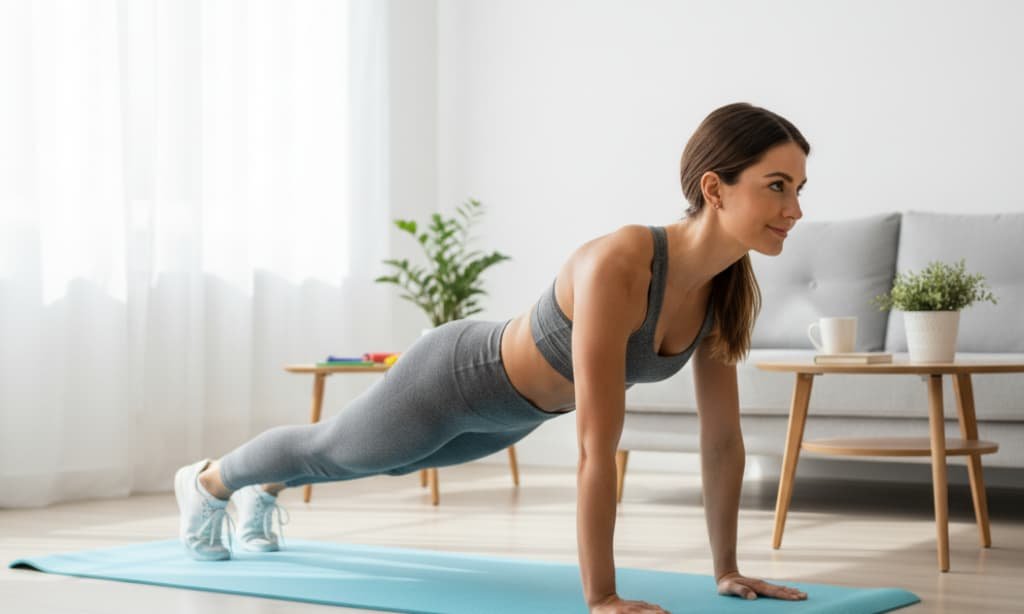
Starting a workout routine does not require a gym membership, expensive equipment, or complicated plans. Many effective workouts can be done anywhere using only bodyweight and a small amount of space. For beginners especially, simplicity matters more than intensity or variety. When workouts are easy to start, easy to repeat, and easy to recover from, consistency improves naturally and results follow steadily over time.
Complex routines often create mental resistance. If a workout feels difficult to begin, requires special setup, or takes too much time, it becomes easy to skip. Simple routines remove this friction. They allow movement to become part of daily life rather than a scheduled event that requires motivation and preparation.
The goal at the beginning is not to push limits, but to build the habit of showing up regularly.
Bodyweight workouts use your own body weight as resistance. This makes them accessible for all fitness levels and adaptable without special equipment. Exercises can be made easier or harder by changing range of motion, tempo, number of repetitions, or rest time.
For example, push-ups can be done against a wall or on the knees for beginners and progressed to full push-ups as strength improves. Squats can be shallow at first and gradually deepen as mobility and confidence increase. Planks can start with short holds and build over time.
This flexibility allows beginners to progress safely while minimizing injury risk and excessive fatigue. Bodyweight training builds coordination, joint stability, and functional strength that transfers directly into daily activities.
A balanced beginner workout should train the entire body rather than isolating small muscle groups. Compound movements engage multiple muscles at once and provide efficient strength development.
Squats strengthen the legs, hips, and glutes while improving balance and mobility. Push-ups develop the chest, shoulders, and arms while strengthening core stability. Planks reinforce core strength and posture. Lunges improve single-leg strength and coordination. Glute bridges strengthen the hips and support lower back health. Rows using resistance bands or household items improve upper-back strength and posture.
Including a mix of these movements creates a well-rounded routine that supports strength, stability, and movement quality without complexity.
Warm-up is an essential part of any workout, especially for beginners. Light movement increases blood flow, warms muscles, and prepares joints for activity. This reduces stiffness and lowers injury risk.
Simple warm-ups may include marching in place, arm circles, hip rotations, gentle stretching, or light dynamic movements. Five to seven minutes of warm-up improves comfort and performance while easing the transition into exercise.
Preparation also includes setting up a safe space, wearing comfortable clothing, and staying hydrated. Small preparation habits reduce friction and increase consistency.
Workout duration does not need to be long to be effective. Sessions lasting 20 to 30 minutes are sufficient to stimulate strength, endurance, and coordination when performed consistently.
Short workouts feel manageable and fit easily into busy schedules. They reduce mental resistance and increase adherence. Over time, intensity, repetitions, or duration can be increased gradually based on comfort and recovery.
Consistency compounds. Small daily or weekly sessions accumulate into meaningful long-term change.
Rest between exercises allows proper form, breathing control, and nervous system recovery. Beginners often rush through workouts, which reduces movement quality and increases fatigue.
Controlled repetitions improve muscle engagement and reduce injury risk. Short rest periods maintain intensity without overwhelming the body. Listening to breathing and form helps regulate pacing.
Recovery continues after workouts. Hydration, sleep, light movement, and balanced nutrition support adaptation and energy restoration.
Progress may not always appear immediately on the scale or in the mirror. Early improvements often show up as increased endurance, smoother movement, improved posture, reduced joint discomfort, and higher confidence.
Tracking small wins reinforces motivation and builds habit identity. Feeling stronger in daily tasks, climbing stairs more easily, or maintaining better posture are meaningful indicators of progress.
Patience strengthens consistency.
Workouts should feel supportive rather than punishing. When exercise feels manageable and enjoyable, adherence improves naturally. Choosing comfortable environments, listening to music, or training at preferred times increases satisfaction.
The goal is building a relationship with movement rather than chasing short-term results.
Simple routines create freedom rather than pressure.
Starting with simple, equipment-free workouts creates a strong base for long-term fitness. Strength, mobility, coordination, and confidence develop gradually when consistency remains intact.
As fitness improves, new challenges can be added without losing the foundation. The habit of movement becomes part of daily identity rather than a temporary project.
Simplicity builds sustainability.