



Newsletter Subscribe
Enter your email address below and subscribe to our newsletter

Enter your email address below and subscribe to our newsletter
Live with Intention

Most starchy foods rapidly break down into glucose, driving sharp rises in blood sugar and insulin. Repeated exposure to these spikes gradually worsens insulin resistance, accelerates fat storage, and stresses the pancreas. Resistant starch behaves differently. Instead of digesting quickly in the small intestine, it passes into the large intestine where gut bacteria ferment it into short-chain fatty acids such as butyrate.
Butyrate supports insulin sensitivity, strengthens the intestinal lining, reduces inflammation, and improves metabolic signaling throughout the body. This makes resistant starch a powerful tool for flattening glucose curves while preserving carbohydrate enjoyment.
One of the simplest methods to increase resistant starch involves temperature manipulation. Cooking starches gelatinizes their molecules. Cooling them allows portions of the starch to crystallize into a structure that resists digestion, a process known as retrogradation. Reheating does not destroy this resistant form. Rice, potatoes, pasta, and bread benefit significantly from this technique.
Clinical studies demonstrate that cooling cooked starches to refrigeration temperature for approximately 24 hours increases resistant starch content and reduces post-meal glucose and insulin responses. This means that meal preparation strategy alone can meaningfully alter metabolic impact without changing food selection.
Naturally resistant starch sources also support metabolic health. Beans, lentils, peas, barley, oats, and certain intact whole grains contain higher resistant starch content even without cooling. These foods deliver fermentation benefits directly to the gut microbiome while supporting stable energy release.
Incorporating resistant starch improves satiety, feeds beneficial bacteria, and reduces glycemic volatility. Over time, this supports better glucose tolerance and insulin efficiency, creating a metabolic environment that handles carbohydrates with far greater stability.
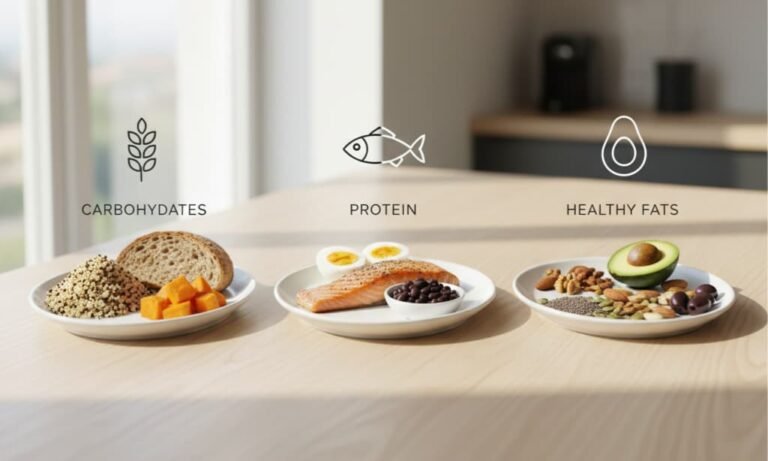
Carbohydrates are rarely consumed in isolation. What accompanies them strongly influences digestion speed, glucose absorption, and insulin demand. Protein and fat slow gastric emptying, delay carbohydrate absorption, and improve hormonal responses that regulate blood sugar.
Large clinical analyses show that adding protein to carbohydrate meals can reduce post-meal glucose exposure by up to half in healthy individuals. Fat further dampens early glucose spikes and supports insulin clearance, improving pancreatic beta-cell efficiency over time.
This is why meals such as rice paired with beans, potatoes prepared with olive oil, or bread consumed alongside protein generate gentler glucose curves compared to carbohydrates eaten alone. The concept often referred to as avoiding “naked carbs” becomes a practical metabolic strategy rather than a rigid rule.
Acidic foods provide an additional layer of control. Vinegar, lemon, lime, and fermented foods reduce starch breakdown speed and improve muscle insulin sensitivity. Vinegar also suppresses excessive liver glucose output, further stabilizing blood sugar after meals.
Even small amounts of acid can meaningfully alter glucose response. Incorporating vinegar-based dressings, fermented vegetables, or citrus into meals creates consistent metabolic benefits without sacrificing flavor.
Strategic food pairing transforms meals into controlled glucose delivery systems rather than metabolic stressors.
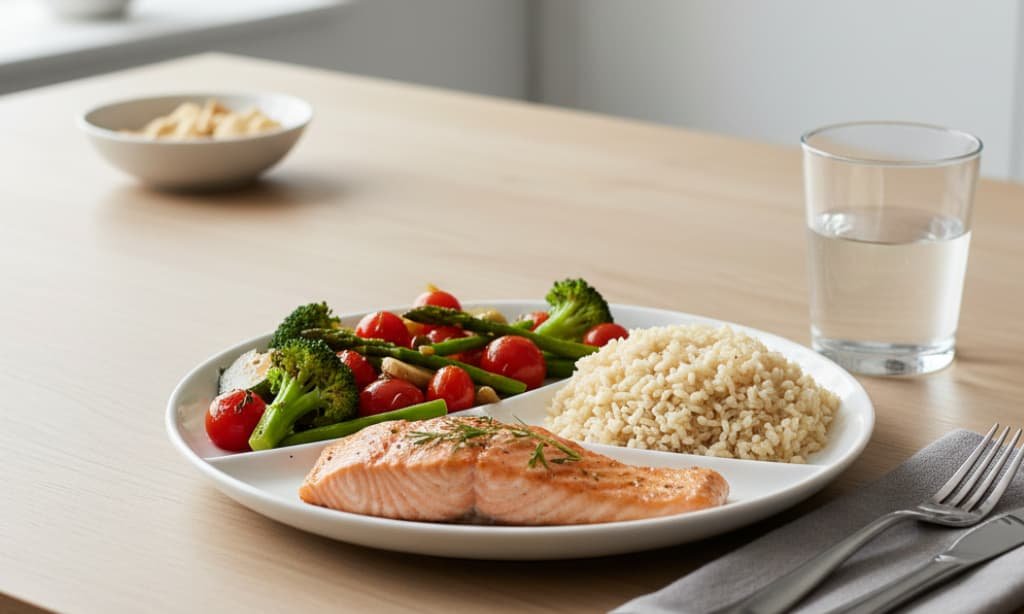
Meal sequence influences how quickly glucose enters circulation. Starting meals with refined carbohydrates produces rapid spikes as glucose enters the bloodstream unopposed. Eating protein, fiber, and vegetables first creates a buffering effect that slows carbohydrate digestion and absorption.
Clinical trials demonstrate that consuming protein and vegetables before carbohydrates reduces post-meal glucose exposure by up to 40% and lowers insulin demand substantially. This effect applies to both individuals with diabetes and metabolically healthy adults.
Restaurants often serve bread, chips, or starch-heavy appetizers first, unintentionally driving glucose volatility before the main meal even arrives. Reversing this order produces measurable metabolic benefits without altering food choices.
Acidity amplifies this effect. Vinegar and fermented foods slow enzymatic starch breakdown and improve muscular glucose uptake. Combining acidic elements with strategic food order compounds glucose stabilization further.
These adjustments require no calorie tracking, no elimination diets, and no lifestyle disruption. They simply optimize physiological sequencing to work in favor of metabolic health.
Light movement immediately after meals significantly lowers post-meal glucose levels. Walking for as little as 10 minutes accelerates glucose uptake by working muscles, reducing the amount circulating in the bloodstream.
The calf muscle known as the soleus plays a major role. This slow-twitch muscle can absorb large quantities of glucose continuously without fatigue. Gentle walking activates this muscle effectively, providing a powerful glucose sink that operates independently of insulin to some extent.
Any light activity supports this effect. Household chores, stair climbing, or standing movement stimulate muscular glucose uptake. Walking remains the most studied and easiest method for consistent application.
Timing matters. Movement should occur as soon as possible after eating to intercept glucose before peak elevation. Delaying activity reduces effectiveness.
Regular post-meal movement improves insulin sensitivity over time, lowers overall glycemic exposure, enhances cardiovascular health, and improves energy stability throughout the day.
Not all carbohydrates behave the same in the body. Physical structure determines digestion speed, glucose release, and insulin demand. Finely milled flours digest rapidly and spike blood sugar aggressively. Intact grains, coarser textures, and fiber-rich foods digest more slowly and generate smoother glucose curves.
Refined carbohydrates behave like sawdust in a fire: they burn quickly and intensely. Whole grains resemble logs: slower combustion with steady energy release. The digestive system mirrors this behavior.
Steel-cut oats, intact barley, legumes, and minimally processed grains preserve structural integrity that slows enzymatic breakdown. White bread, pastries, instant cereals, and refined chips eliminate this protective structure and rapidly elevate glucose.
Fiber further moderates absorption speed, feeds beneficial gut bacteria, and improves insulin sensitivity. Adequate fiber intake supports long-term metabolic resilience even in reduced-carbohydrate dietary patterns.
Carbohydrate quality selection does not require elimination. It requires choosing intact, minimally processed forms that align with physiological digestion rates.
Glucose tolerance follows a circadian rhythm. Insulin sensitivity peaks earlier in the day and declines toward evening. Eating late increases post-meal glucose exposure even when consuming identical foods.
Melatonin elevation at night suppresses insulin secretion further, compounding glucose handling challenges. Late dinners consistently correlate with higher overnight glucose levels, poorer sleep quality, and worsened metabolic outcomes.
Aligning meals earlier improves glycemic control naturally. Finishing the final meal at least three hours before bedtime allows glucose clearance before sleep and supports overnight metabolic recovery.
Meal timing interacts synergistically with all other strategies. Resistant starch, food pairing, movement, and carb quality perform optimally when aligned with circadian biology.
Flattening glucose spikes does not require eliminating cultural staples or abandoning favorite foods. It requires strategic preparation, intelligent pairing, behavioral sequencing, and biological alignment.
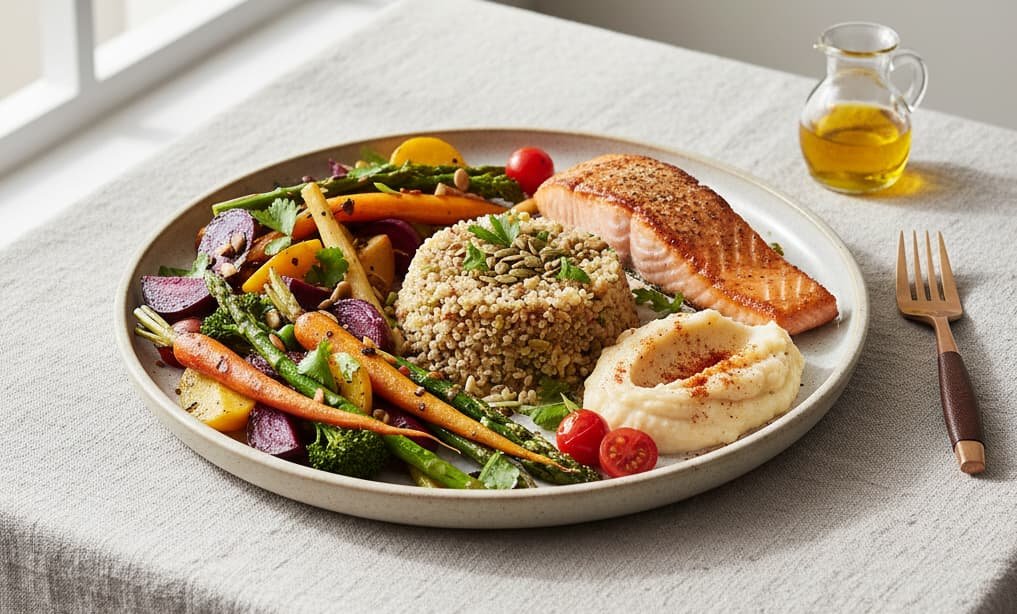
A typical day might include cooled and reheated rice paired with protein and olive oil, vinegar-based vegetables consumed before starch, a short walk after meals, intact grain selection over refined flours, and earlier dinner timing.
These small adjustments accumulate into powerful metabolic improvements. Insulin sensitivity improves, inflammation decreases, energy stabilizes, appetite regulation strengthens, and long-term disease risk declines.
Consistency matters more than perfection. Each optimized meal reinforces metabolic efficiency, building resilience over time rather than chasing short-term restriction cycles.
Carbohydrates become tools instead of threats when biology is respected and leveraged intelligently.