







Newsletter Subscribe
Enter your email address below and subscribe to our newsletter

Enter your email address below and subscribe to our newsletter
Live with Intention

Weight loss is often explained as a simple math problem: eat fewer calories than you burn and the weight will drop. While this is technically true in a laboratory sense, it ignores how the human body actually behaves. If weight loss were only about willpower and calorie math, far more people would succeed long term. The reality is more complex, and misunderstanding that complexity is one of the main reasons people struggle.
The body is not a calculator. It is a biological system that adapts constantly to protect survival. Hormones, sleep quality, stress levels, food quality, activity patterns, and emotional state all influence how energy is stored and used. When these factors are ignored, even disciplined efforts can feel frustrating and inconsistent.
Understanding how the body responds to change creates more realistic expectations and better long-term outcomes.
At the most basic level, weight loss happens when the body consistently uses more energy than it receives from food. However, this balance is not static. The body adjusts energy use based on intake, activity, sleep, stress, and perceived safety.
When calories drop aggressively, the body responds defensively. Metabolism slows slightly to conserve energy. Hunger hormones increase to encourage eating. Energy levels drop, movement decreases subconsciously, and cravings intensify. These responses evolved to protect humans from starvation, not to support modern dieting goals.
This biological adaptation explains why strict calorie restriction feels increasingly difficult over time and why willpower alone rarely sustains long-term weight loss.
Crash diets often produce fast initial weight loss, largely from water and glycogen depletion. However, this phase is followed by rising hunger, fatigue, irritability, reduced training capacity, and mental exhaustion.
As restriction continues, the body becomes more efficient at conserving energy. When normal eating resumes, weight returns quickly because metabolism remains suppressed temporarily and appetite remains elevated.
This cycle creates frustration and reinforces the belief that weight loss is impossible. In reality, the strategy was incompatible with human biology.
Sustainable weight loss works in the opposite direction. Small, consistent changes create progress without triggering defensive adaptations.
Food quality influences appetite as much as calorie quantity. Diets dominated by ultra-processed foods digest quickly, spike blood sugar, and fail to provide lasting fullness. This makes portion control difficult even when calorie targets are technically met.
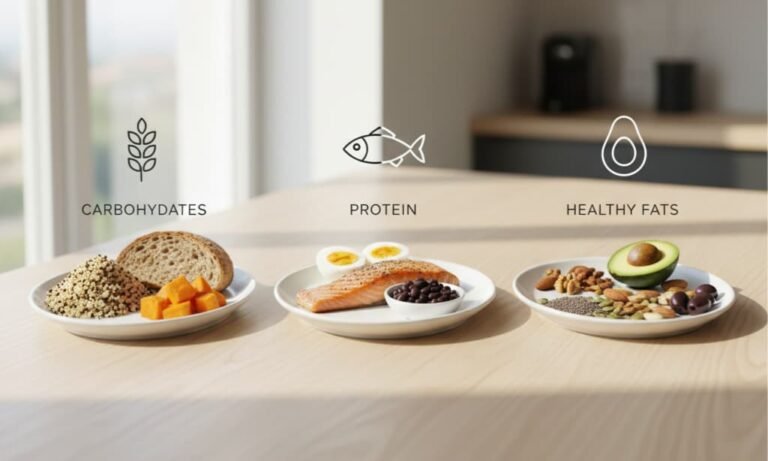
Whole foods such as vegetables, fruits, lean proteins, legumes, and whole grains naturally regulate hunger. Protein supports satiety and muscle preservation. Fiber slows digestion, stabilizes blood sugar, and supports gut health.
When meals prioritize protein and fiber, people often eat fewer calories without consciously restricting portions. Appetite becomes calmer rather than constantly demanding control.
Exercise supports health, cardiovascular fitness, muscle preservation, stress reduction, and mood regulation. However, it plays a smaller role in fat loss than most people expect.
A single workout can be offset easily by a few high-calorie snacks or larger portions later in the day. Over-reliance on exercise for calorie burning often leads to frustration when weight loss slows despite increased activity.
Fat loss is driven primarily by daily eating habits and lifestyle consistency. Movement supports body composition, metabolic health, and long-term maintenance rather than serving as the primary driver of weight loss.
Exercise strengthens the system. Nutrition directs the outcome.
Sleep and stress are often underestimated in weight management. Poor sleep increases hunger hormones and reduces insulin sensitivity, making appetite harder to regulate. Fatigue also weakens impulse control and increases cravings for quick energy foods.
Chronic stress elevates cortisol, which can increase appetite and promote fat storage, particularly around the abdomen. Stress also increases emotional eating behaviors and disrupts digestion.
Improving sleep quality and managing stress frequently improves weight control without major dietary changes. Recovery supports regulation.
Motivation is temporary. Habits operate automatically. Sustainable weight loss depends on building routines that require minimal mental effort.
Eating at similar times, planning meals in advance, keeping nutritious foods accessible, drinking enough water, walking regularly, and maintaining consistent sleep schedules reduce reliance on willpower.
When behaviors become automatic, consistency becomes natural rather than forced.
Small habits compound into large outcomes.
The scale does not tell the full story. Body weight fluctuates daily due to hydration, digestion, hormonal shifts, sodium intake, and training stress. Short-term fluctuations do not reflect fat changes accurately.
Progress often appears first through improved energy, mood, digestion, strength, sleep quality, and clothing fit. Plateaus are normal and usually temporary. They reflect biological adaptation rather than failure.
Patience supports long-term success.
Weight loss is not about punishment, deprivation, or perfection. It is about creating a way of eating and living that you can maintain for years, not weeks.
The true goal is not just losing weight but building a healthy relationship with food, body awareness, and sustainable habits that support long-term well-being.
Sustainable systems outperform short-term fixes.