







Newsletter Subscribe
Enter your email address below and subscribe to our newsletter

Enter your email address below and subscribe to our newsletter
Live with Intention

Nutrition is often made far more complicated than it needs to be. Between conflicting advice, social media trends, extreme diets, and strict rules, many people feel overwhelmed before they even begin. When information feels confusing or contradictory, motivation drops and consistency becomes difficult.
In reality, healthy nutrition is built on a few simple principles applied consistently. You do not need perfection, expensive products, or rigid plans. Understanding the basics removes confusion and allows better decisions to happen naturally.
Simplicity creates clarity. Clarity supports consistency.
At its core, nutrition is about giving the body what it needs to function well. This includes energy for daily activity, building blocks for repair and recovery, and nutrients that support organs, hormones, brain function, immune health, and emotional stability.
Food is not only about weight control. It influences digestion, mood, energy levels, sleep quality, stress resilience, and long-term disease risk. When nourishment is balanced, the body operates more efficiently and daily life feels easier.
Nutrition should support how you live rather than feel like a constant battle.
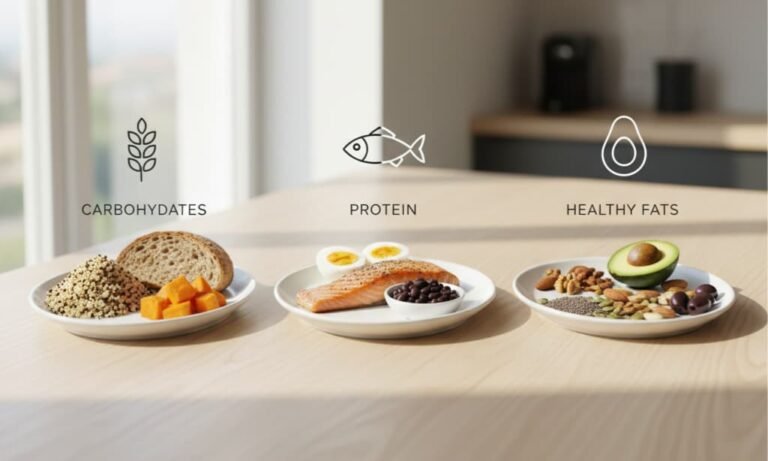
Macronutrients form the foundation of nutrition. Each macronutrient serves a distinct and essential purpose.
Carbohydrates provide the primary source of energy for the brain and muscles. They support cognitive function, physical performance, and mood stability. Eliminating carbohydrates completely often leads to fatigue, irritability, cravings, and reduced training performance.
Proteins support muscle maintenance, tissue repair, immune function, and appetite regulation. Adequate protein intake improves fullness and supports metabolic stability during weight management.
Fats support hormone production, brain health, joint lubrication, and the absorption of fat-soluble vitamins. Healthy fats contribute to satiety and overall cellular health.
Problems arise when any macronutrient is eliminated or severely restricted for long periods. Balance supports sustainability.
Micronutrients, including vitamins and minerals, regulate thousands of biological processes. They influence bone strength, nerve signaling, oxygen transport, immune defense, and enzyme activity.
Diets lacking variety often fall short in micronutrient intake even when calorie goals are met. This may show up as fatigue, low immunity, brittle hair or nails, brain fog, slow recovery, or increased cravings.
Eating a diverse range of whole foods naturally covers micronutrient needs without supplements for most people. Colorful vegetables, fruits, legumes, nuts, seeds, whole grains, and quality protein sources provide a wide spectrum of nutrients.
Variety strengthens resilience.
Fiber plays a major role in digestion, gut health, and appetite regulation. Fiber-rich foods slow digestion, stabilize blood sugar, and support beneficial gut bacteria.
Adequate fiber intake improves fullness, reduces cravings, supports cholesterol balance, and improves digestive comfort. Many people focus on calories and protein while underestimating fiber intake.
Vegetables, fruits, beans, lentils, whole grains, nuts, and seeds provide natural fiber sources. Increasing fiber gradually improves tolerance and digestive comfort.
Fiber supports long-term metabolic health.
Hydration is a basic but often overlooked component of nutrition. Water supports circulation, digestion, temperature regulation, nutrient transport, and waste removal.
Mild dehydration can mimic hunger, fatigue, headaches, and poor concentration. This often leads to unnecessary snacking or reduced activity.
Drinking water consistently throughout the day supports clearer hunger signals and better energy regulation. Hydration improves exercise performance, digestion, and recovery.
Simple hydration habits create meaningful impact.
Nutrition does not require flawless meals every day. What matters most is what happens most of the time. Balanced, nourishing meals repeated consistently create lasting health improvements.
Chasing perfection often leads to stress, guilt, and burnout. Flexibility allows nutrition to fit real life while maintaining overall direction.
Small habits practiced daily outperform extreme efforts practiced briefly.
Nutrition should support lifestyle rather than compete with it. Meals should fit schedule, budget, culture, preferences, and energy levels. When eating feels manageable and enjoyable, consistency becomes automatic.
Understanding basic principles allows confident decision-making without rigid rules. Food choices become calmer and less reactive.
Sustainable nutrition builds long-term health through simple, repeatable actions.