



Newsletter Subscribe
Enter your email address below and subscribe to our newsletter

Enter your email address below and subscribe to our newsletter
Live with Intention
Protein is often talked about in weight loss conversations, but most people only hear fragments of the real story. Many assume protein is only important for bodybuilders, gym addicts, or athletes trying to gain muscle. In reality, protein plays one of the most important roles in fat loss, appetite control, and long-term health for everyday people.
When weight loss feels difficult, it is rarely because someone lacks willpower. More often, the problem comes from eating foods that do not keep the body satisfied, stable, or energized. Protein changes this equation. It helps regulate hunger, supports metabolism, protects muscle mass, and makes dieting feel more natural instead of constantly restrictive.
Understanding how protein works allows you to make smarter food choices without obsessing over calories, complicated plans, or extreme diets.
One of the strongest benefits of protein is how filling it is. Protein slows digestion and keeps food in the stomach longer compared to carbohydrates or fats. This creates a steady release of energy and reduces the rapid hunger spikes that lead to snacking and overeating.
Many people struggling with weight gain are not eating excessive amounts of food overall. They are eating foods that digest quickly and leave them hungry again soon after. Sugary snacks, refined breads, sweet drinks, and ultra-processed foods create short bursts of energy followed by crashes that trigger cravings.
Protein stabilizes this cycle. A meal that contains enough protein sends stronger fullness signals to the brain. You naturally feel satisfied with smaller portions and stay full for longer periods. This reduces emotional eating, late-night snacking, and constant grazing throughout the day.
Over time, better appetite control means fewer unnecessary calories without forcing yourself to fight hunger every day. This is why protein is often one of the easiest tools for sustainable fat loss.
Weight loss is not only about losing scale weight. What matters is what the body is losing. Without enough protein, calorie reduction can lead to muscle loss alongside fat loss. Losing muscle is a problem because muscle supports strength, posture, metabolic health, and long-term energy balance.
Muscle tissue burns more energy than fat tissue even at rest. When muscle decreases, metabolism slows down slightly, making it easier to regain weight later. This is one reason why many people lose weight initially but struggle to maintain results.
Protein sends a signal to the body that muscle tissue is needed and should be protected. When protein intake is adequate, the body prioritizes fat loss instead of breaking down muscle for energy. This helps maintain strength, tone, and metabolic stability while reducing body fat.
Even if you are not lifting heavy weights, protein still protects muscle during daily movement and normal activity. This creates healthier weight loss rather than simply becoming smaller and weaker.
Another advantage of protein is how much energy the body uses to digest it. This is called the thermic effect of food. Protein requires more energy to break down and process compared to carbohydrates and fats.
While this difference is not dramatic in the short term, it adds up gradually over weeks and months. Your body burns slightly more calories just by digesting protein-rich meals. Combined with improved appetite control and muscle preservation, this supports steady fat loss without extreme calorie cutting.
Think of this as a small efficiency boost rather than a magic trick. Protein does not burn fat by itself, but it creates conditions that make weight management easier and more stable over time.
Many people believe they need extremely high protein intake to see results. This often leads to unnecessary supplements, rigid tracking, or uncomfortable eating habits. In reality, most people benefit simply from consistent, moderate protein intake spread throughout the day.
A practical approach is to include a protein source at each main meal. You do not need perfection or precise measurements. The goal is regular exposure, not obsession. Examples of good protein sources include eggs, yogurt, fish, chicken, turkey, beans, lentils, tofu, cottage cheese, and dairy products.
Portion size can vary based on body size, activity level, and preferences, but focusing on balanced meals rather than chasing numbers keeps the process sustainable. Consistency matters more than intensity.
Protein should feel like a normal part of eating, not a forced rule.
Many people worry about timing protein perfectly or consuming special shakes at exact intervals. For most people, this level of precision is unnecessary. What truly matters is distributing protein across meals so hunger remains stable throughout the day.
Skipping protein at breakfast is a common mistake. A breakfast heavy in sugar or refined carbohydrates often leads to energy crashes and stronger cravings later in the morning or afternoon. Adding protein early helps stabilize appetite and reduces impulsive eating later.
Lunch and dinner should also include protein to maintain fullness and steady energy. Snacks can include protein as well, but they are optional if meals are satisfying enough.
Simple consistency works better than complicated schedules.
Protein works best when paired with fiber-rich foods. Fiber adds volume, nutrients, and digestive support while protein provides satiety and metabolic benefits. Together, they create meals that feel satisfying without excessive calories.
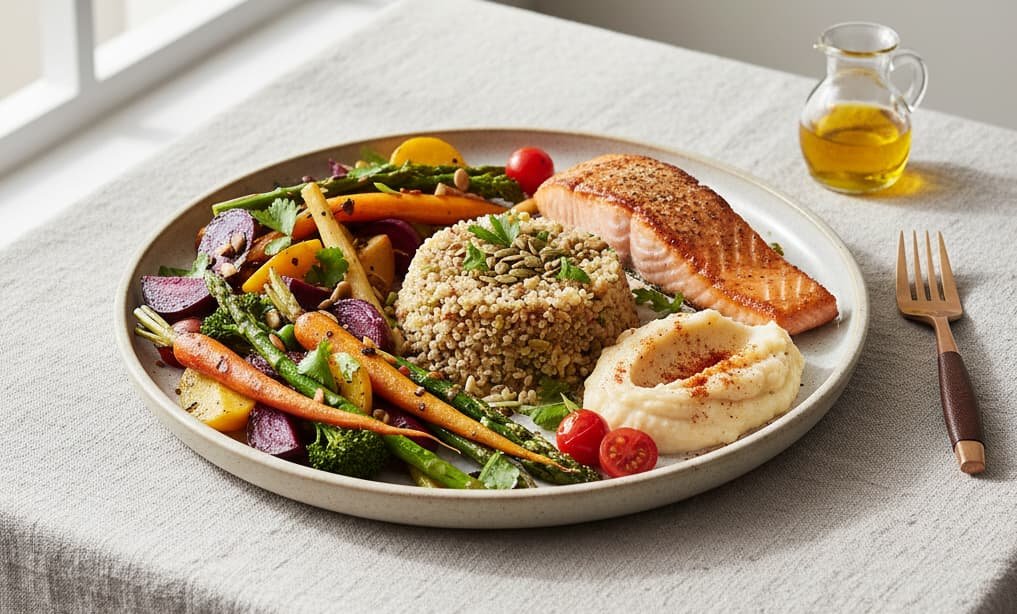
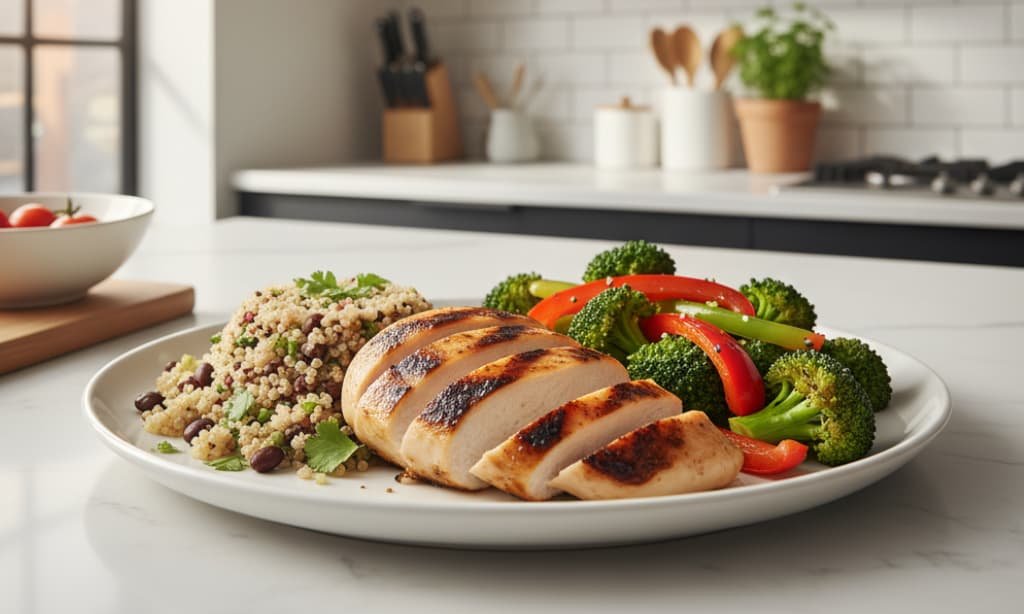
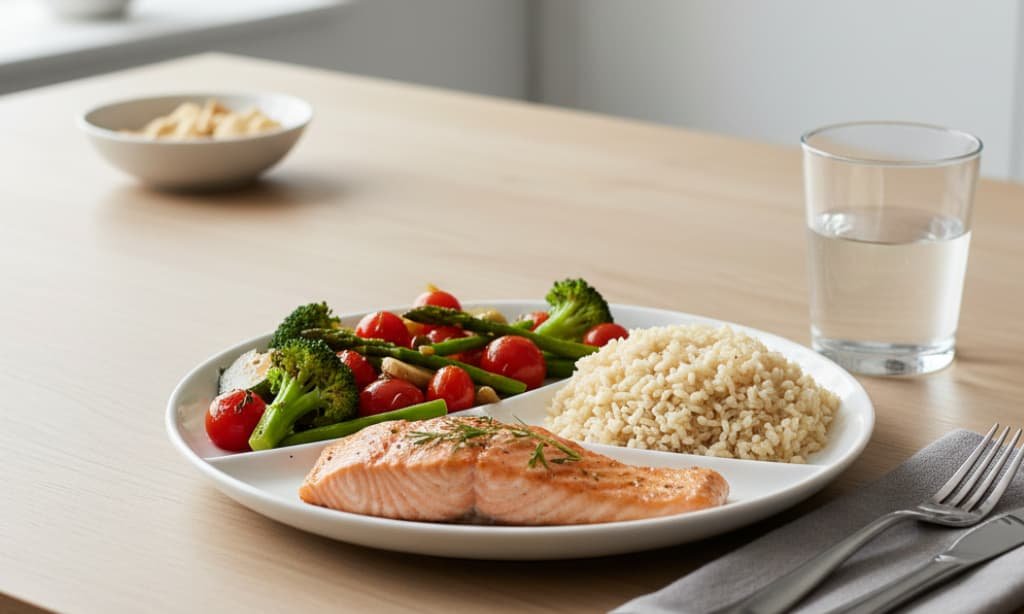
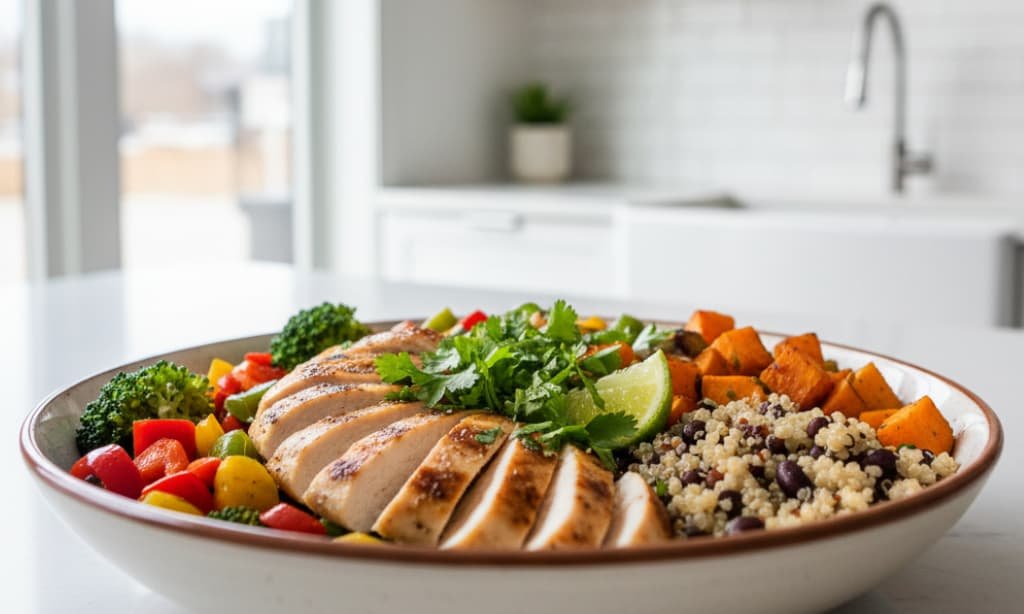
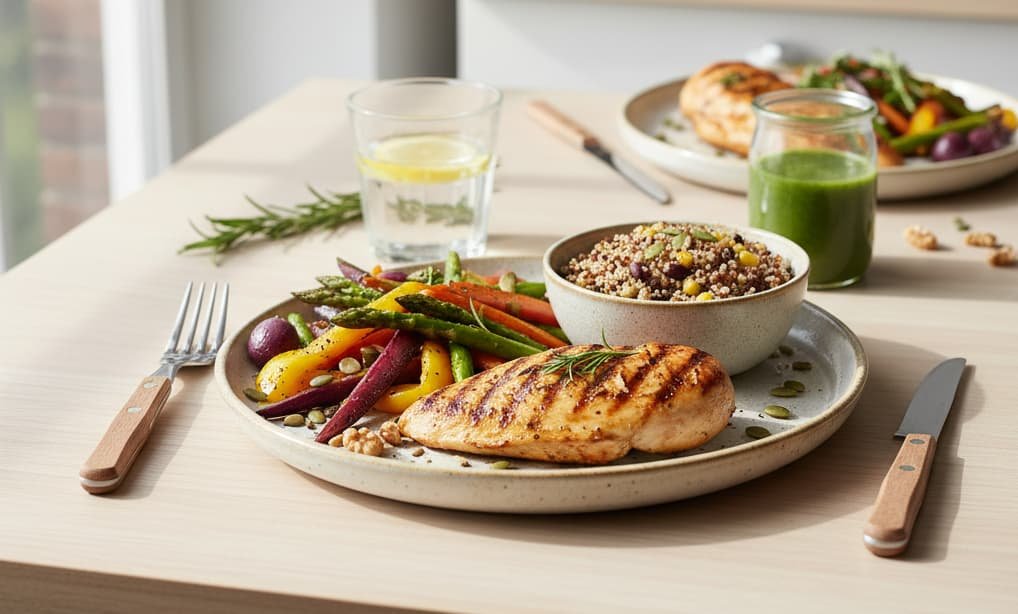
Vegetables, fruits, beans, legumes, and whole grains complement protein naturally. A plate that includes lean protein, colorful vegetables, and some whole carbohydrates supports stable blood sugar, digestion, and long-lasting fullness.
This combination allows you to eat generous portions while still supporting fat loss. It also improves micronutrient intake, gut health, and long-term sustainability.
Rather than cutting entire food groups, building balanced meals creates better results with less stress.
Weight loss becomes difficult when meals leave you hungry, tired, and frustrated. This often leads to cycles of restriction, overeating, guilt, and burnout. Protein changes the experience by making meals more satisfying and stable.
When meals are satisfying, cravings decrease. Energy levels improve. Decision fatigue drops. You stop constantly thinking about food because your body feels nourished and balanced. This creates natural calorie control instead of forced discipline.
Instead of focusing on what you must remove from your diet, shifting attention toward adequate protein intake often leads to healthier choices automatically. People tend to eat less junk food when they feel full and steady.
This mindset supports long-term results rather than short-term dieting.
You do not need drastic changes to benefit from protein. Small adjustments create meaningful impact. Adding eggs or yogurt to breakfast, including a protein source at lunch, choosing balanced dinners, and pairing snacks with protein gradually improves appetite control and consistency.
Cooking methods do not need to be complicated. Grilling, boiling, roasting, or simple pan cooking keeps preparation easy. Plant-based options work just as well when combined properly.
The key is creating habits that fit your lifestyle rather than forcing rigid rules.
Protein is not a magic solution, but it is one of the most reliable tools for sustainable weight loss. It improves fullness, protects muscle, slightly increases energy use, stabilizes appetite, and supports long-term consistency.
When you prioritize protein within balanced meals, weight management becomes simpler and more natural. Instead of fighting hunger, you work with your body’s biology.
Healthy fat loss is not about suffering or extreme restriction. It is about creating meals that support stability, satisfaction, and long-term health. Protein plays a central role in making that possible.