Breaking News




Popular News





Enter your email address below and subscribe to our newsletter
Live with Intention
Rice water treatments have deep historical roots across Asia, particularly in regions where long, resilient hair was culturally valued. Communities recognized that rice fermentation created a nutrient-dense liquid capable of strengthening hair fibers, improving shine, and supporting scalp balance. While modern hair care relies heavily on synthetic conditioners and surfactants, fermented rice water works biologically rather than cosmetically.
Raw rice contains B-complex vitamins, amino acids, minerals, and trace antioxidants. During fermentation, naturally occurring microbes metabolize starches and release additional bioactive compounds. This process increases bioavailability and produces metabolic byproducts that actively nourish skin and hair tissue.
One of the most valuable fermentation metabolites is pitera, a complex mixture of amino acids, organic acids, peptides, and vitamins formed by yeast activity. Pitera enhances surface hydration, improves light reflection, and restores smooth cuticle alignment, giving hair a healthier shine and improved texture. This compound is widely used in high-end skincare for its regenerative effects on skin barrier integrity and cellular turnover.
Fermentation also produces lactic acid through lactic acid bacteria activity. Lactic acid supports scalp pH balance by maintaining a mildly acidic environment. Healthy scalp pH discourages fungal overgrowth, reduces irritation, stabilizes sebum production, and improves cuticle closure on hair strands. Acidic environments reduce frizz, increase shine, and improve hair manageability.
Additional fermentation byproducts include magnesium, selenium, peptides, and nitric oxide–stimulating compounds that enhance microcirculation around the follicle. Improved circulation increases oxygen and nutrient delivery to the hair root, supporting stronger growth and healthier anchoring of hair fibers.
When applied consistently, fermented rice water does not simply coat hair cosmetically. It modifies the scalp ecosystem, restores microbial balance, improves nutrient availability, and strengthens structural integrity at the follicular level.
The scalp is a living ecosystem composed of bacteria, fungi, immune signaling molecules, sebaceous glands, and follicular stem cells. Modern shampoos frequently disrupt this ecosystem by stripping protective oils and eliminating beneficial microbes. Over-sterilization creates imbalances that allow yeast and pathogenic organisms to dominate, often leading to dandruff, inflammation, itchiness, and impaired follicle performance.
Fermented rice water reintroduces beneficial microorganisms and their metabolites. These microbes compete with harmful organisms for resources and surface space, restoring biological balance. Friendly microbes also produce antimicrobial peptides and organic acids that suppress pathogenic growth naturally without damaging the skin barrier.
Lactic acid improves desquamation, helping remove dead skin cells that clog follicles and restrict oxygen flow. Improved exfoliation supports healthier follicle cycling and reduces buildup that can impair hair shaft emergence.
Nitric oxide stimulation improves microvascular dilation within scalp tissue. Increased blood flow enhances delivery of glucose, amino acids, oxygen, and minerals to hair matrix cells. These cells require high metabolic throughput during the anagen growth phase. Improved circulation accelerates growth velocity and strengthens emerging fibers.
B vitamins produced during fermentation support keratin synthesis, mitochondrial energy production, and cellular repair mechanisms inside follicles. Amino acids directly contribute to structural protein assembly within the hair shaft.
Pitera improves surface hydration and lipid organization within the cuticle layer, preventing moisture loss and mechanical damage. This translates into stronger strands, reduced breakage, and improved elasticity.
By targeting microbial balance, circulation, cellular metabolism, and surface integrity simultaneously, fermented rice water functions as a biological scalp therapy rather than a cosmetic coating.
Preparation determines effectiveness. Simply soaking rice briefly does not produce fermentation benefits or meaningful microbial activity. Proper fermentation allows microbes to multiply and generate bioactive metabolites.
Two cups of dry rice are placed in a bowl with four cups of water. The rice is gently massaged by hand to remove surface debris and excess starch. The water is then drained, leaving the rice damp and clean.
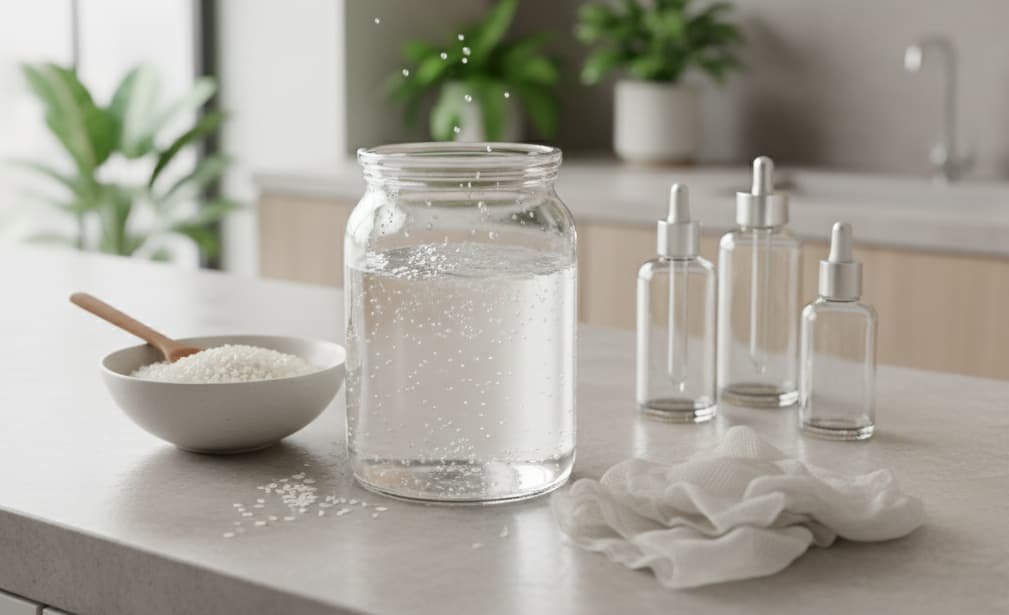
Two additional cups of fresh water are added to the rice. The mixture is stirred lightly and allowed to sit at room temperature for approximately two hours. After this initial soak, the liquid is strained into a clean glass jar. The rice itself is discarded.
The jar is covered loosely with breathable material such as cheesecloth or a paper towel. Air exposure allows environmental microbes and naturally occurring yeast from the rice surface to begin fermentation.
The jar is left at room temperature for 48 hours. During this period, microbial metabolism converts starches into organic acids, vitamins, peptides, and fermentation gases. Small bubbles often appear, indicating active fermentation.
Fermentation beyond 48 hours is possible but unnecessary. Extended fermentation may produce strong odors due to microbial overgrowth and excessive acid accumulation. A 48-hour window delivers optimal balance between potency and stability.
After fermentation completes, the jar is sealed and refrigerated. Cold temperatures slow microbial activity and preserve the solution for multiple applications over several weeks.
Application consistency and proper timing determine outcomes. Hair and scalp should be clean prior to application to maximize absorption and microbial interaction.
Fermented rice water is applied directly to the scalp and hair using hands or a squeeze bottle. Gentle massage distributes the liquid evenly across the scalp surface and stimulates microcirculation.
The solution remains on the scalp and hair for approximately 20 minutes. This exposure allows lactic acid, microbial metabolites, amino acids, and minerals to penetrate the scalp barrier and coat the cuticle surface.
After the exposure period, hair is rinsed thoroughly with clean water. Shampoo is not necessary after every application unless heavy product buildup exists. Over-shampooing may disrupt newly restored microbial balance.
Twice-weekly application delivers steady microbial support without overwhelming the scalp. A two-week cycle typically requires approximately four cups of fermented solution.
The same solution can be applied to facial skin using a cotton pad for gentle microbiome support and surface hydration when desired.
Within the first week, scalp comfort often improves. Reduced itchiness, less flaking, improved oil balance, and decreased tightness commonly appear as microbial balance stabilizes and inflammation declines.
By the second week, hair texture often becomes smoother and more reflective due to improved cuticle alignment and surface hydration. Reduced frizz, increased softness, and improved detangling are frequently observed.
Microcirculation improvements enhance follicle oxygen delivery, supporting healthier hair anchoring and reduced shedding over time. While significant regrowth requires longer cycles, early strengthening and reduced breakage can become noticeable.
Scalp microbiome stabilization decreases fungal overgrowth tendencies, helping resolve dandruff and mild dermatitis patterns. Improved pH balance supports long-term follicle resilience and barrier integrity.
Nitric oxide–mediated circulation improvements support follicle metabolic activity, which may accelerate growth velocity over extended use.
The cumulative effect is a healthier scalp ecosystem that supports sustainable hair quality rather than temporary cosmetic masking.
Using non-fermented rice water provides minimal benefit because microbial activity and metabolite production have not occurred. Short soaking alone does not generate pitera, lactic acid, or probiotic populations.
Over-fermentation beyond several days may produce unpleasant odors and excessive acidity that can irritate sensitive scalps. Maintaining a 48-hour fermentation window preserves balance.
Over-application frequency may disrupt microbial equilibrium. Twice weekly is sufficient for most scalps to maintain stability without overstimulation.
Excessive shampooing between treatments counteracts microbial restoration by stripping beneficial organisms and oils. Gentle cleansing supports therapy effectiveness.
Applying on dirty or heavily product-coated hair limits penetration and reduces microbial contact with the scalp surface.
Using contaminated containers or unclean preparation environments may introduce unwanted microbes. Clean glass containers and breathable covers reduce contamination risk.
Consistency matters more than intensity. Stable repetition allows the scalp ecosystem to rebalance gradually without triggering inflammatory responses.
Topical therapies perform best when systemic nutrition supports follicle biology. Adequate protein intake supplies amino acids for keratin synthesis. Micronutrients such as zinc, selenium, magnesium, and B vitamins support enzymatic processes involved in hair cycling.
Vitamin D supports follicle stem cell activation and immune regulation. Balanced sun exposure or supplementation maintains follicular signaling stability.
Hydration supports scalp circulation and nutrient delivery. Dehydration reduces peripheral blood flow and compromises follicle metabolism.
Sleep quality regulates growth hormone secretion, cellular repair cycles, and immune modulation. Chronic sleep disruption impairs hair regeneration.
Stress management reduces cortisol-mediated inflammatory signaling that can accelerate shedding and disrupt follicle cycling.
When topical microbial restoration aligns with systemic nutritional and hormonal stability, hair regeneration becomes more sustainable and resilient over time.
Fermented rice water represents a biologically intelligent approach to hair care by restoring microbial balance, supporting scalp chemistry, strengthening cuticle integrity, and enhancing follicle metabolism through natural biochemical pathways rather than surface-level cosmetic masking.