Breaking News


Popular News




Enter your email address below and subscribe to our newsletter
Live with Intention

Most diets fail not because they are ineffective, but because they are too complicated to maintain. When eating requires constant tracking, strict rules, calorie counting, or special foods, motivation fades quickly. Mental fatigue builds, daily life becomes stressful, and the plan slowly breaks down. Even the most scientifically sound diet will fail if it does not fit real life.
People do not live in controlled environments. Work schedules change, family responsibilities interrupt routines, social events happen, and energy levels fluctuate. A diet that demands perfection in every situation becomes fragile. The moment structure disappears, consistency collapses.
A sustainable diet works differently. It is simple, flexible, and easy to repeat. It blends into daily life rather than fighting against it. The goal is not discipline through force but consistency through ease.
When eating feels natural instead of restrictive, long-term success becomes far more achievable.
The foundation of a long-term diet is routine. Routine reduces decision fatigue and removes unnecessary mental effort. When meals follow a predictable structure, healthy choices become automatic instead of emotional.
This does not mean eating the exact same foods every day. It means creating a simple pattern that repeats. For example, starting the day with a protein-based breakfast, choosing a balanced lunch, and keeping dinner simple removes constant planning. Once this structure is established, small variations keep meals enjoyable without disrupting consistency.
Routine creates stability in energy levels and appetite. The body responds well to regular nourishment instead of unpredictable eating schedules. Hunger signals become more reliable, cravings reduce, and digestion improves.
Predictability also reduces impulsive eating. When meals are planned loosely, there is less reliance on convenience foods or emotional choices. Routine builds momentum and removes friction from healthy habits.
Portion awareness matters more than precision. You do not need exact measurements, scales, or calorie apps to manage intake effectively. Overcomplicating portions often increases stress and reduces sustainability.
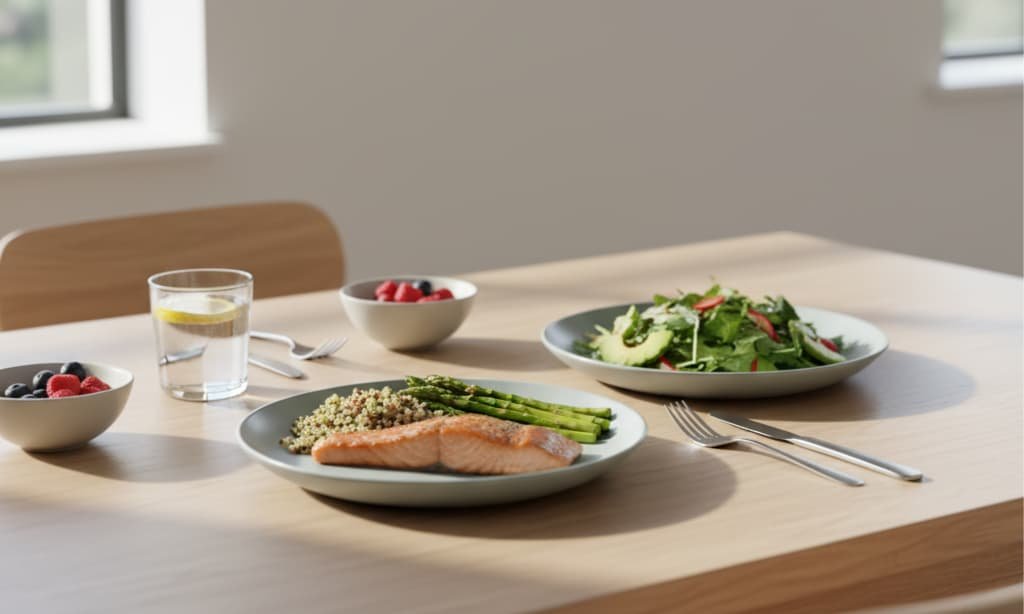
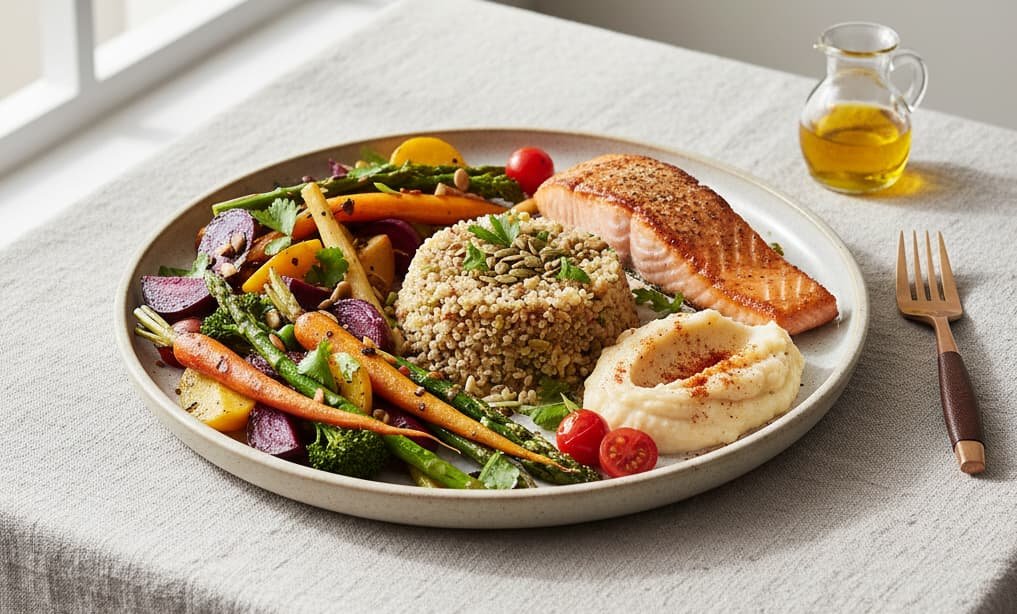
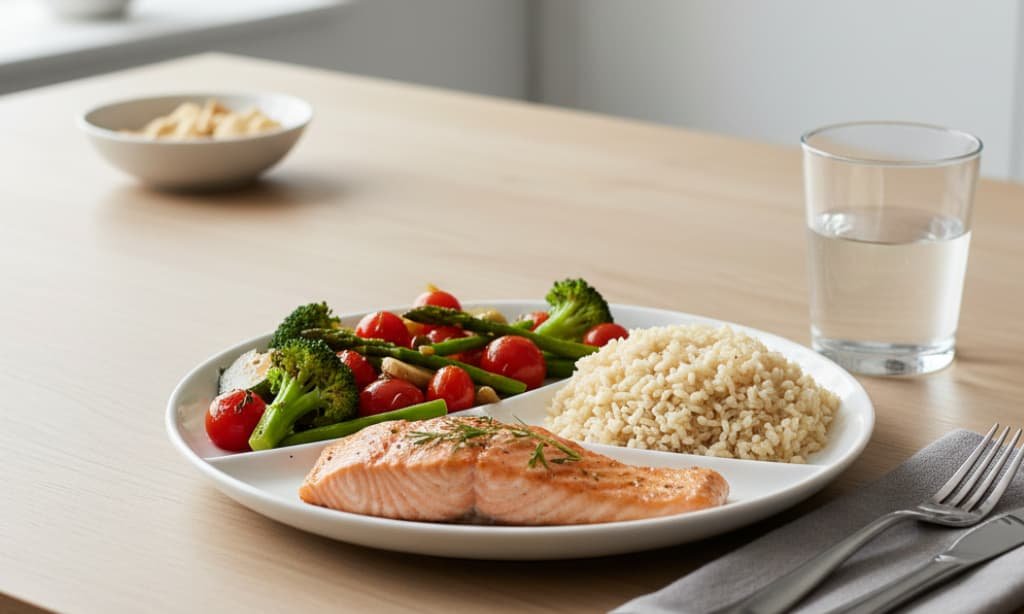
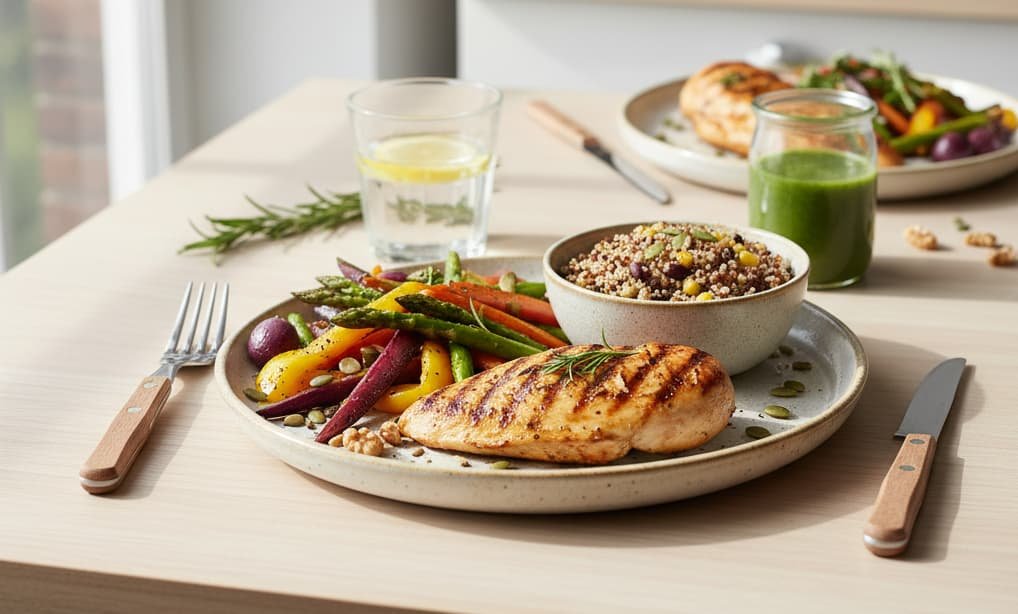
Simple visual cues work well for most people. Filling half the plate with vegetables increases volume and nutrients while keeping calories controlled. Including a palm-sized portion of protein supports fullness and muscle maintenance. Adding moderate amounts of carbohydrates and healthy fats balances energy without excess.
This approach allows flexibility while maintaining structure. Meals remain satisfying without the pressure of perfection. Learning portion awareness gradually improves intuitive control over eating.
When portions are managed naturally, food becomes less emotionally charged. There is less fear of overeating and less guilt after meals. Confidence grows as the body responds positively to consistent balance.
Flexibility is essential for long-term success. Life includes social gatherings, travel, celebrations, busy schedules, and unexpected changes. A diet that collapses during these moments creates frustration and discouragement.
Sustainable eating allows room for variation while returning to normal patterns afterward. One meal does not define progress. Patterns over time matter far more than isolated choices. Flexibility prevents the all-or-nothing mindset that leads to cycles of restriction and overeating.
Enjoying occasional treats without guilt maintains mental balance and reduces cravings. When food is not forbidden, it loses emotional power. Eating becomes calmer and more controlled.
Flexibility supports confidence. Instead of feeling trapped by rules, you develop trust in your ability to make balanced choices even when conditions are imperfect.
Meal preparation does not need to be complex or time-consuming. The goal is not perfection but convenience and consistency. Preparing a few basic ingredients ahead of time reduces daily friction and supports better choices when time is limited.
Cooking protein in advance, washing and chopping vegetables, preparing grains, or keeping healthy staples ready makes meals faster to assemble. This reduces dependence on fast food or highly processed options during busy days.
Simple preparation creates momentum. When healthy food is easily available, decision-making becomes effortless. Small preparation habits compound into long-term consistency without overwhelming effort.
The key is simplicity. Choose methods that fit your schedule and lifestyle rather than forcing complicated systems that create burnout.
Listening to hunger and fullness cues improves control over time. Many people overeat not because they are hungry, but because they eat quickly, while distracted, or out of habit.
Eating slowly allows the body to register fullness properly. Pausing during meals, chewing thoroughly, and checking in with hunger signals helps prevent overeating naturally. Stopping when comfortably full rather than overly stuffed supports better digestion and energy levels.
Mindful eating builds awareness. You begin to recognize patterns, emotional triggers, and true hunger signals. This strengthens self-regulation without rigid rules.
Over time, the body learns balance. Appetite becomes more predictable, cravings decrease, and satisfaction improves.
A sustainable diet supports both physical energy and emotional stability. Extreme restriction often leads to fatigue, irritability, brain fog, and strong cravings. These symptoms increase the likelihood of quitting.
Balanced meals that include enough protein, fiber, and healthy fats stabilize blood sugar and energy levels. Stable energy reduces emotional eating and improves focus, productivity, and mood.
When the body is properly fueled, motivation remains steady instead of fluctuating. Food choices become easier because the body feels supported rather than deprived.
Mental clarity improves when nutrition is stable. Decision-making becomes calmer and less reactive. This strengthens long-term adherence.
The best diet is one you can repeat without constant effort. Consistency matters more than intensity. Small habits performed daily outperform extreme efforts that cannot be maintained.
Simplicity removes friction. Routine creates structure. Flexibility prevents burnout. Together, these elements create a system that supports long-term success.
Progress happens quietly when habits align with lifestyle. There is no constant struggle, no emotional swings, and no dependence on motivation. Instead, healthy behavior becomes normal behavior.
Consistency builds trust with yourself. Confidence grows as results accumulate naturally.
A sustainable diet must match personal lifestyle, schedule, culture, budget, and preferences. There is no universal plan that fits everyone. What works for one person may not work for another.
Personalization increases adherence. Choosing foods you enjoy, cooking methods you prefer, and routines that fit your day makes consistency easier. Health improves when habits feel natural rather than forced.
Simple systems outperform complex ones. Repeating a few reliable meals, maintaining portion awareness, staying flexible, and preparing basics ahead of time create stability without stress.
Long-term health depends on what you can maintain for years, not weeks.
A sustainable diet is not about control, punishment, or rigid discipline. It is about building habits that support energy, stability, and enjoyment over time.
When eating becomes simple and predictable, stress decreases. When flexibility exists, confidence grows. When routine supports structure, consistency follows naturally.
Results emerge as a side effect of stable habits rather than aggressive effort. Health becomes a lifestyle rather than a temporary project.
The most effective diet is not the strictest or most impressive. It is the one that quietly fits into daily life and continues working long after motivation fades.