Breaking News


Popular News





Enter your email address below and subscribe to our newsletter
Live with Intention
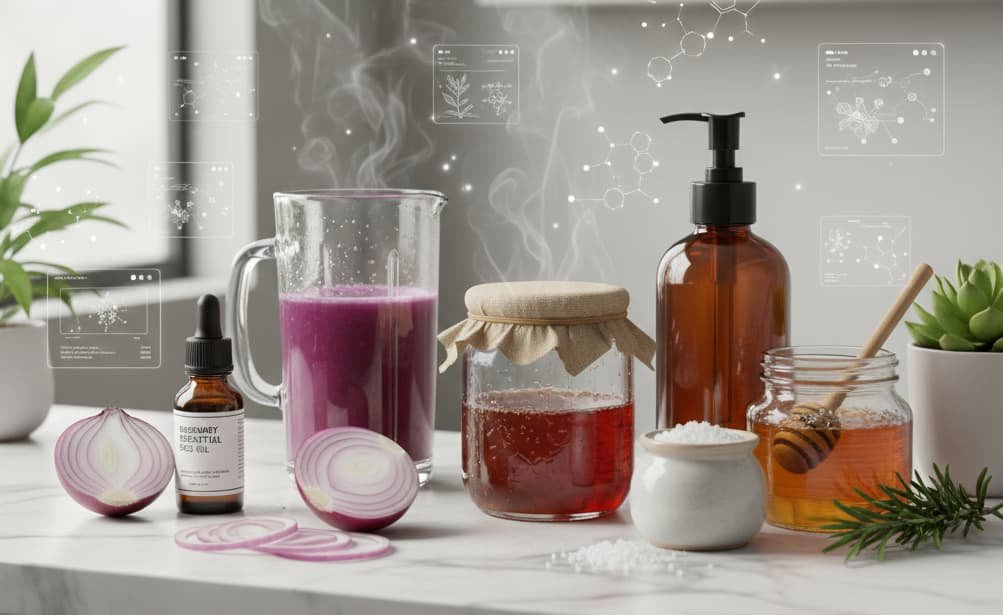
Hair growth is a biologically demanding process that depends on adequate protein synthesis, blood circulation, immune balance, microbial control, and follicle signaling. When any of these systems become impaired, shedding, thinning, or patchy loss can occur. Onion juice addresses several of these mechanisms simultaneously, making it uniquely effective across different types of hair loss.
Onions are exceptionally rich in sulfur compounds. Sulfur forms the structural backbone of keratin, the primary protein composing hair shafts. Without sufficient sulfur availability, keratin production weakens, leading to fragile strands and reduced growth capacity. Topical sulfur exposure directly supports follicle protein synthesis at the scalp level.
Onions also contain extremely high concentrations of quercetin, a potent flavonoid with multiple biological actions. Quercetin suppresses inflammatory immune signaling, particularly T-cell mediated autoimmune activity that can attack hair follicles in conditions such as alopecia areata. Reducing immune aggression allows dormant follicles to re-enter the growth phase.
Beyond immune regulation, quercetin stimulates growth factor signaling inside the follicle bulb. This enhances cellular proliferation and improves follicular energy metabolism, accelerating visible regrowth. Quercetin also exhibits antimicrobial activity against yeast, fungal organisms, and pathogenic bacteria that disrupt scalp health and contribute to dandruff, itching, folliculitis, and inflammation-driven hair loss.
Sulfur compounds further improve microcirculation by enhancing nitric oxide signaling and capillary dilation, allowing more oxygen and nutrients to reach follicle roots. Increased blood flow supports stronger hair anchoring and thicker shaft formation.
Together, sulfur density, quercetin concentration, antimicrobial action, and circulatory support create a powerful multi-pathway stimulus for scalp recovery and hair regeneration.
Effective onion therapy begins with proper extraction to preserve bioactive compounds while ensuring easy scalp application.
An organic red onion is preferred because red varieties contain the highest quercetin concentration. The onion should be chopped into small pieces and blended thoroughly until a smooth slurry forms. The blended mixture is then strained through cheesecloth to separate the liquid extract from the fibrous pulp.
The extracted juice should be transferred into a clean container or squeeze bottle for controlled application. Fresh juice maintains maximum enzymatic and phytochemical activity, which supports better therapeutic outcomes.
Before application, hair should be fully wet to improve scalp absorption and distribution. The onion juice is then massaged directly into the scalp and hair roots using fingertips for several minutes. Gentle mechanical stimulation enhances circulation and improves penetration into follicle openings.
After application, the scalp should remain covered with a shower cap to prevent evaporation and allow active compounds to remain in contact with the skin. A minimum contact time of 30 minutes provides benefit, while a full 60-minute exposure maximizes absorption.
Following the treatment period, hair should be rinsed thoroughly and shampooed twice to eliminate residual odor. Proper cleansing prevents lingering sulfur scent and maintains scalp comfort.
This protocol can be performed twice per week for four to six weeks. Initial regrowth signals often begin appearing between the third and fourth week as follicle activity increases.
Adding rosemary essential oil significantly amplifies the effectiveness of onion juice therapy. Clinical studies demonstrate that rosemary oil performs comparably to pharmaceutical hair loss medications in improving hair density and thickness when applied consistently.
Rosemary contains bioactive terpenes and phenolic compounds that reduce inflammation, improve microcirculation, stimulate follicular nerve signaling, and regulate immune balance. Increased scalp blood flow improves nutrient delivery while reducing hypoxic stress on follicles.
Five drops of rosemary essential oil can be added directly into the onion juice mixture prior to application. The oils disperse throughout the liquid and enhance penetration into the scalp. Rosemary also improves scent profile, making the treatment more pleasant without masking therapeutic compounds.
The combination of sulfur-driven keratin synthesis, quercetin immune modulation, and rosemary circulation enhancement creates a synergistic regenerative environment that supports stronger, thicker, and faster-growing hair.
Clinical evidence supports this synergy. Controlled trials have shown significant hair regrowth within six weeks using onion juice alone compared to water controls. Animal studies isolating quercetin demonstrate complete hair regeneration in treated groups. Rosemary oil independently produces measurable density improvements comparable to standard treatments.
Combining these elements enhances consistency, speed, and durability of results.
Fermentation dramatically increases the potency of onion therapy by improving nutrient bioavailability, enhancing quercetin activity, increasing vitamin synthesis, and optimizing scalp pH.
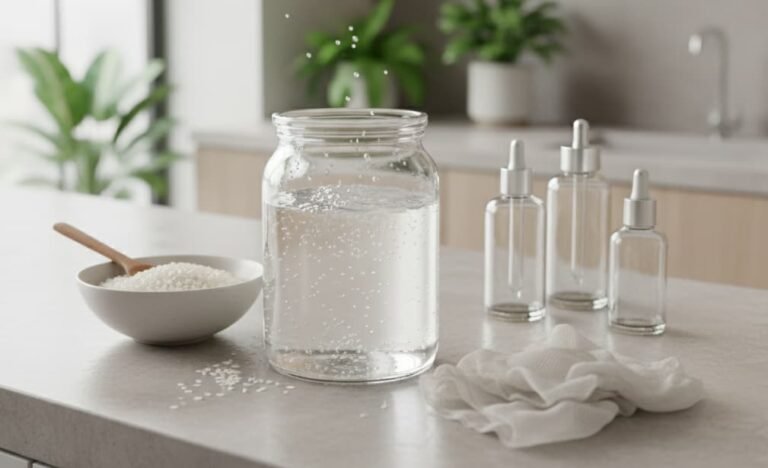
To ferment onion juice, a red onion is blended and strained as usual. The extracted liquid is transferred into a mason jar. Eight ounces of clean water are added along with one teaspoon of sea salt and half a teaspoon of raw honey. The mixture is stirred thoroughly and covered loosely with cheesecloth or a coffee filter to allow airflow while preventing contamination.
The jar is placed at room temperature for approximately 72 hours. During fermentation, naturally occurring microbes metabolize sugars and release carbon dioxide bubbles. This microbial activity increases nutrient bioavailability and produces additional beneficial compounds.
Fermentation lowers the pH of the liquid toward approximately 5.0, closely matching the natural acidity of healthy scalp skin. This acidic environment suppresses pathogenic fungal and bacterial overgrowth while strengthening the scalp barrier and improving follicle stability.
Microbial fermentation also increases vitamin synthesis, including B-complex compounds that support cellular energy production and keratin synthesis. Enhanced mineral absorption further supports follicle metabolism.
After fermentation, the liquid is strained again and transferred into a squeeze bottle. Application follows the same protocol as fresh onion juice: wet scalp, massage into roots, cover for one hour, then rinse and shampoo twice.
Fermented onion juice provides deeper penetration, stronger antimicrobial action, improved scalp microbiome balance, and amplified regenerative signaling compared to non-fermented preparations.
Consistency and proper technique determine long-term success. Twice-weekly application maintains sustained follicle stimulation while allowing the scalp to recover between treatments.
Patch testing should be performed prior to full application to rule out sensitivity. A small amount of diluted onion juice applied behind the ear or on the inner forearm allows assessment of irritation risk.
Scalp massage should remain gentle to avoid mechanical follicle trauma. Excessive friction can counteract regenerative benefits. Fingertip pressure should stimulate circulation without causing redness or abrasion.
Hair should always be thoroughly rinsed after treatment to prevent residue accumulation. Double shampooing removes sulfur compounds completely while preserving scalp comfort.
Individuals with open wounds, active infections, or severe dermatitis should resolve underlying skin conditions before initiating therapy. Fermented preparations may be especially beneficial in cases of dandruff, yeast imbalance, or chronic inflammation.
Visible improvement often begins within three to four weeks, while maximal density changes typically require six to twelve weeks of consistent application. Hair growth cycles require patience, as follicles transition gradually from resting to active phases.
Topical therapy achieves optimal results when paired with systemic nutritional support. Vitamin D plays a critical role in follicle cycling, immune modulation, and stem cell activation within hair roots. Adequate vitamin D status supports long-term follicle resilience and regrowth stability.
Sunlight exposure or appropriate supplementation ensures sufficient levels for cellular signaling. Maintaining optimal vitamin D supports immune balance and reduces autoimmune-driven follicle suppression.
Dietary protein intake supports keratin synthesis, while essential fatty acids maintain follicle membrane integrity and scalp barrier health. Zinc, iron, selenium, biotin, and magnesium support enzymatic processes involved in follicle growth and cellular turnover.
Hydration supports nutrient delivery to scalp microcirculation and maintains skin elasticity. Chronic dehydration reduces peripheral blood flow and compromises follicle nourishment.
Stress regulation supports hormonal stability. Elevated cortisol disrupts immune balance, reduces circulation, and accelerates hair shedding. Adequate sleep, movement, and nervous system regulation improve follicle recovery.
Microbial balance also influences scalp health. Maintaining gut microbiome integrity supports systemic immune regulation, reducing inflammatory signaling that can disrupt hair growth cycles.
When nutritional, hormonal, and topical factors align, follicles regain regenerative capacity and sustain long-term density improvements.
Onion-based scalp therapy delivers multi-dimensional benefits beyond cosmetic regrowth. Reduced inflammation improves scalp comfort, eliminates chronic itching, and stabilizes barrier function. Improved microbial balance reduces dandruff recurrence and fungal overgrowth.
Enhanced circulation strengthens follicle anchoring and improves pigment stability, often slowing premature graying patterns associated with oxidative stress. Sulfur replenishment improves hair tensile strength and reduces breakage.
Quercetin-mediated immune modulation supports recovery in autoimmune-driven shedding patterns. Fermentation-derived acidity restores scalp pH balance, improving resilience against environmental stressors.
Consistent use transforms the scalp into a biologically supportive environment for continuous hair renewal rather than episodic regrowth attempts. When combined with systemic nutrition and lifestyle optimization, results compound over time, producing thicker, stronger, and healthier hair structure.
Natural therapies that operate through biological pathways rather than surface stimulation create durable outcomes that align with the body’s regenerative capacity. Onion juice therapy represents one of the most accessible, cost-effective, and evidence-supported natural interventions available for scalp restoration and hair regrowth.