Breaking News



Popular News






Enter your email address below and subscribe to our newsletter
Live with Intention

Low-calorie diets are frequently promoted as the fastest way to lose weight. At first, they often appear effective because sharply reducing calories leads to quick short-term weight loss. However, many people struggle to maintain these diets and commonly regain the lost weight. Understanding why this happens reveals what works better for sustainable progress.
The human body is designed for survival, not rapid weight loss. When energy intake drops too low, biological systems activate protective mechanisms that make long-term adherence difficult.
Short-term results do not always equal long-term success.
When calorie intake falls significantly below the body’s needs, the body adapts by conserving energy. Metabolic rate slows slightly to preserve fuel. Hunger hormones increase to encourage eating. Spontaneous movement often decreases without conscious awareness.
This adaptation is a survival mechanism, not a flaw. Historically, food scarcity required energy conservation to protect survival. In modern dieting, this response makes extreme restriction increasingly uncomfortable and unsustainable.
As hunger intensifies, people feel tired, irritable, distracted, and preoccupied with food. Over time, willpower gives way to biological pressure, often leading to overeating or binge cycles.
Biology eventually overrides discipline.
Low-calorie diets often reduce nutrient intake unintentionally. Eating very small amounts of food increases the risk of missing essential vitamins, minerals, protein, and fiber.
Protein deficiency increases muscle loss, weakens immune function, and slows recovery. Muscle loss reduces metabolic efficiency and makes weight maintenance harder long term.
Micronutrient deficiencies may contribute to fatigue, brain fog, mood instability, weakened immunity, hair loss, and digestive problems. These symptoms reduce motivation and quality of life.
Nutrition quality matters as much as calorie quantity.
Extremely low-calorie plans rarely fit real life. Social gatherings, family meals, cultural foods, travel, and work schedules become sources of stress rather than enjoyment.
When a diet feels isolating, rigid, or constantly restrictive, adherence declines. Many people maintain strict diets only temporarily before reverting to old habits.
Sustainable change requires integration into everyday life.
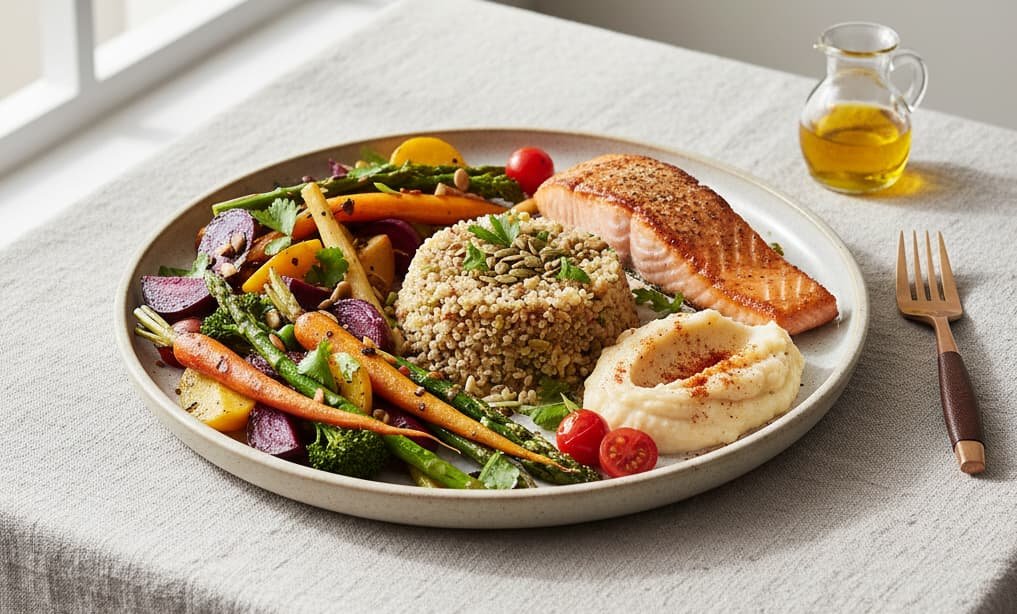
A more effective approach emphasizes moderate calorie control combined with food quality. Meals that include adequate protein, fiber-rich foods, and healthy fats promote fullness, stable energy, and better appetite control.
When meals are satisfying, portion control becomes natural rather than forced. Hunger remains manageable, energy stays stable, and cravings decrease.
Balanced nutrition reduces the mental effort required to maintain consistency.
Eating enough to feel satisfied improves mood, energy, sleep quality, and motivation. Daily movement feels easier when the body is properly fueled. Exercise recovery improves. Stress resilience strengthens.
These factors indirectly support energy balance without extreme restriction. The body cooperates rather than resists.
Consistency grows when the body feels supported.
Instead of chasing the lowest possible calorie intake, focusing on habits produces better results. Regular meals, mindful eating, hydration, sleep quality, daily movement, and stress management regulate appetite and energy naturally.
Small behavioral changes compound over time. Progress may feel slower, but it remains stable and maintainable.
Systems outperform shortcuts.
Low-calorie diets often fail because they fight biology. Hunger, fatigue, and metabolic adaptation eventually overpower rigid rules.
Approaches that respect nourishment, recovery, and routine work with the body rather than against it. This creates a pathway for steady progress that can be maintained for years instead of weeks.
Sustainable progress comes from alignment, not restriction.